If you have been in the rock business for any length of time…
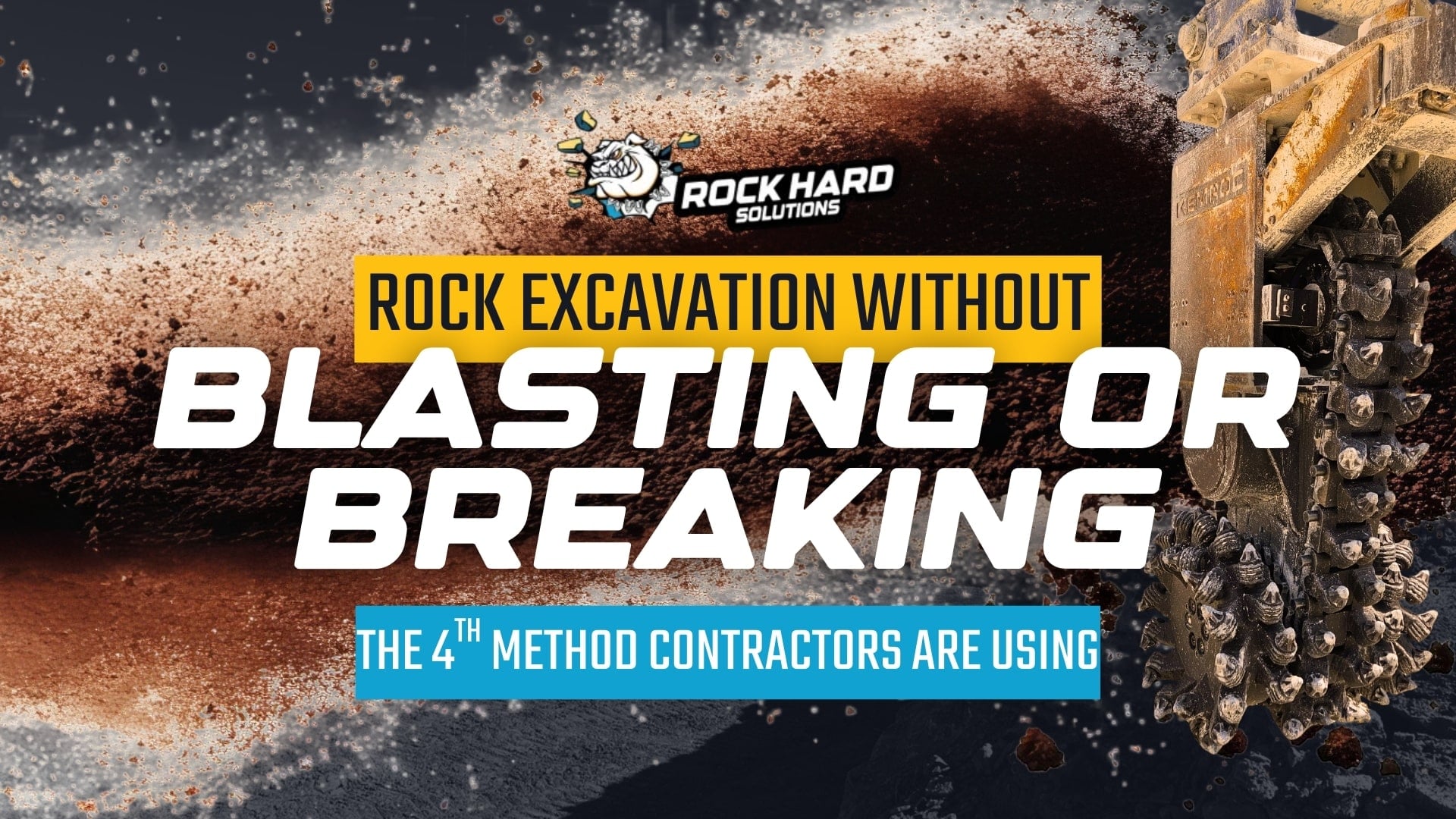
…you know the classic three ways to remove rock: blasting, hammering, and trenching. That has been the playbook for decades. But now there is a fourth method changing how contractors handle trenching and mass rock: cutting with KEMROC attachments.
Instead of blowing rock apart or beating it to pieces with a hammer, you cut only what you need, reuse the spoil, and keep your equipment running instead of sitting in the shop. This overview breaks down what rock cutting is, how it compares to traditional methods, and what you can expect in terms of cost, performance, and reliability.
The Limits of Hammering, Trenching, and Blasting
On paper, hammers, trenchers, and blasting all get the job done. In the field, they come with serious drawbacks.
Hydraulic hammers
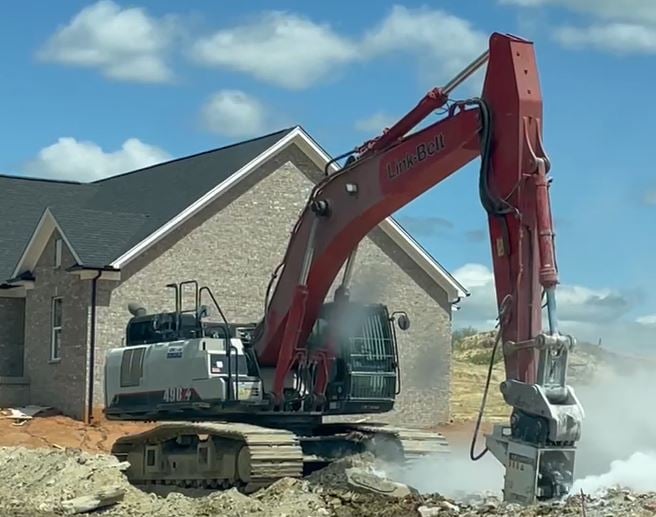
Hammers are slow, loud, and hard on equipment. Production drops fast at depth, and operators spend long days fighting the same problems. When a hammer blows up halfway through the ditch, the entire crew stops and waits for another one to arrive. Oversized boulders pile up, and now you are paying for hauling, crushing, screening, or disposal.
Rock trenchers
Rock trenchers work, but they are expensive to own and maintain. They often require an operator and a mechanic ready to go at all times. When you are not trenching, a million-dollar machine sits in the yard while you still carry the cost.
Blasting
Blasting can be fast, but it comes with permits, delays, safety limits, and the challenge of oversized rock. It is not always possible near structures or utilities, and you still have cleanup and secondary breaking afterward.
Rock Cutting: The Fourth Method Contractors Are Switching To
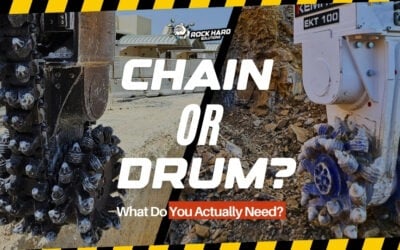
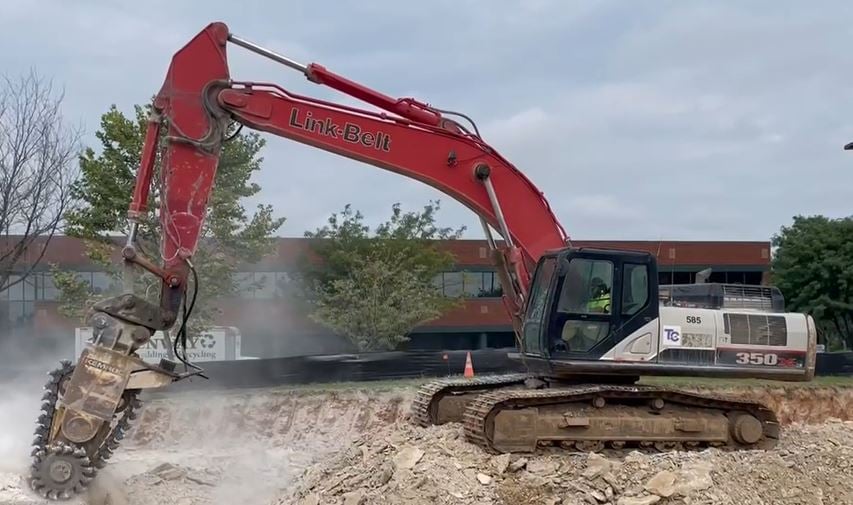
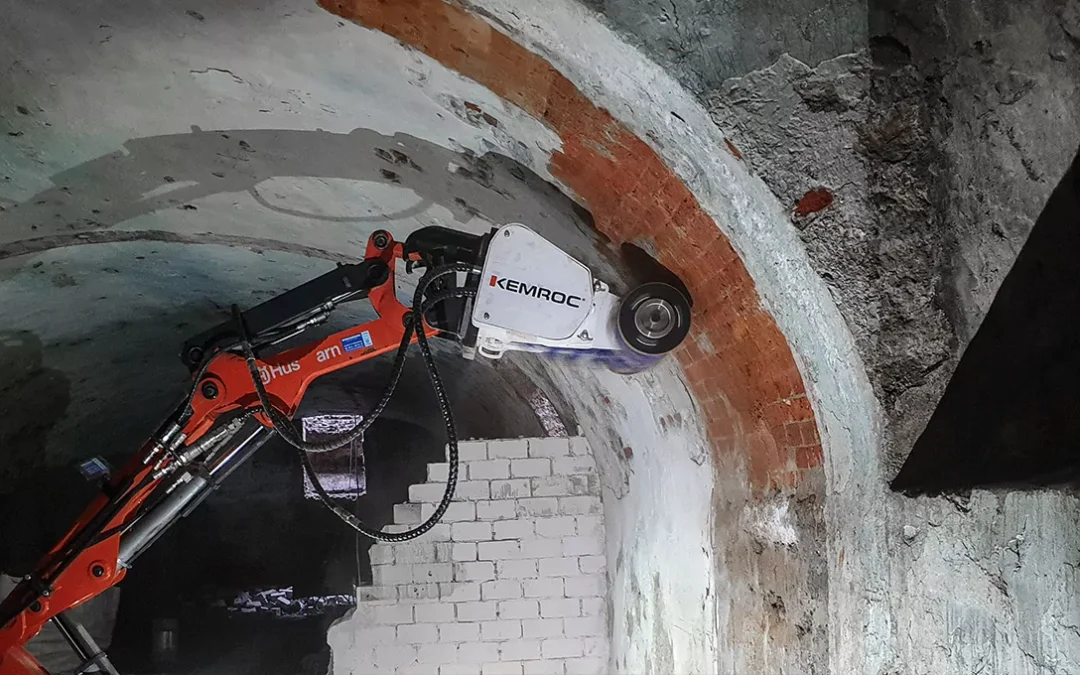
Rock cutting with KEMROC drum cutters, bullhead cutters, and chain cutters gives you a new option. Instead of widening the trench at the surface or breaking rock into oversized pieces, you cut the exact width you need. The spoil that comes out of the ground can often go right back in the trench or be used as road base.
Cutting is clean, controlled, and predictable. You save time, reduce the amount of backfill you need, and avoid the repairs and downtime that come with hammers and trenchers.
How Cutting Saves Money on Every Rock Job without Blasting
Less backfill and lower labor costs
When you hold a constant trench width from top to bottom, everything downstream becomes more efficient. You move fewer cubic yards, bring in less stone, and spend less time compacting and cleaning up. Crews stay focused on pipe installation instead of dealing with oversized rock or messy trench walls.
Reusable spoil
Cutters typically produce six inch minus material that is ready to use. You are not staring at a pile of boulders you need to haul or process. You simply move the spoil where it needs to go next.
Where Rock Cutting Works Best without Blasting
KEMROC cutters have been used across a wide range of projects. They are ideal for fire loops, utility runs, sanitary connections, and deep crossings where trench width matters. They also work on mass rock where thousands of yards need to be moved without blasting.
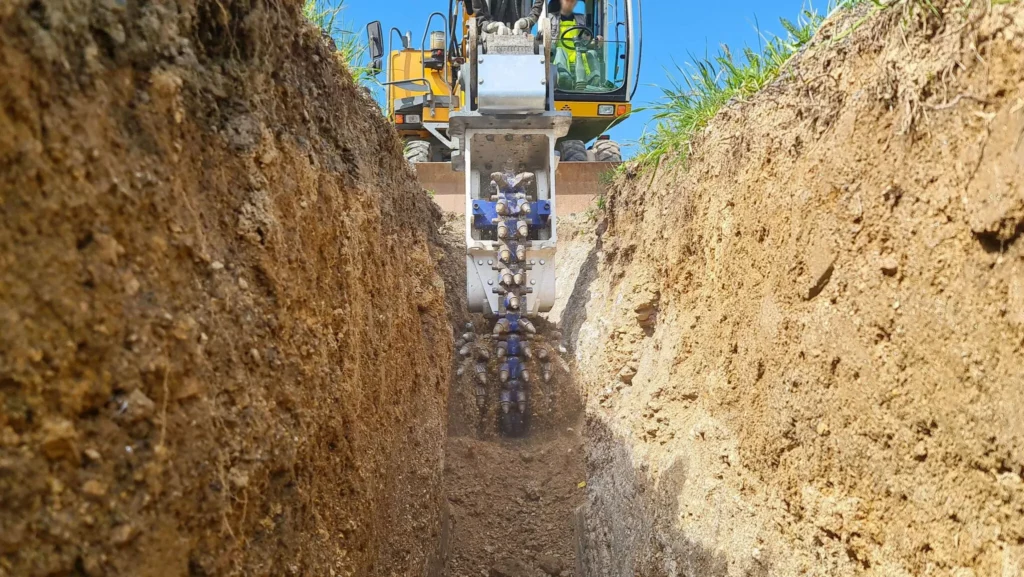
Contractors are cutting the rock out of the way and reusing it on roads or in backfill without wasting material or paying for a crusher.
Cost, Reliability, and the “Too Good to Be True” Question
Lower operating and maintenance costs
Contractors often ask why they did not make the switch sooner. Hourly operating and maintenance costs are significantly lower than hammers, and far below rock trenchers. You are also running a machine you already own, instead of parking a dedicated trencher when the job changes.
What can go wrong
Like any mechanical attachment, cutters can fail. Years of field use show most failures come from simple issues like a closed hydraulic valve or a plugged case drain. Chain cutters wear like a dozer track and need attention over time, but the amount of rock removed before that happens keeps the cost per hour below a hoe ram.
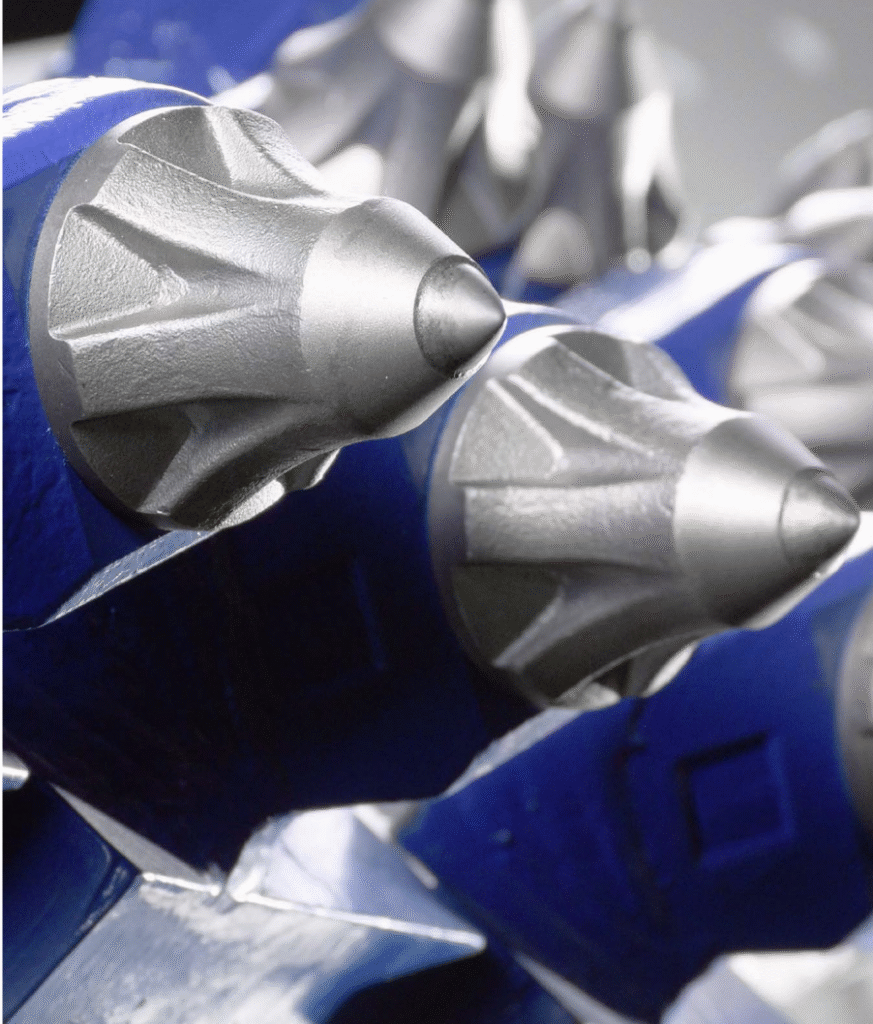
Repairs are straightforward. Chains can be swapped in the field. Motors and components are accessible. In one case, a chain on an EK 150 was replaced during a demo in about one hour and fifteen minutes, and the cutter was back in service while clients watched.
Why This Technology Feels New
Rock cutting is not a new invention. It has been used in Europe since the late 1980s and has been refined over several decades. What is new is how widely it is now used in the United States as contractors experience the difference it makes on trenching and mass rock jobs.
Support for Crews New to Cutting
If your team has never used a cutter, there is training and guidance available. You can see the units in action, have one brought to your job, and learn how to match the right attachment to your excavator and your ground conditions. Once crews see it in the field, the learning curve is short.
A Straight Answer on Cost and Next Steps
If you are tired of losing money on hammers or parking a trencher when the rock is gone, it is time to look at cutting.
Ready to see the KEMROC difference for yourself?
Call for a free quote: (502) 305 8480
Visit the website: www.rockhardsolutions.com
Email the team: sales@rockhardsolutions.com
We can walk through your project, your ground, and your machines, and help you choose the attachment that fits. any spec sheet ever could.