
If you are searching for rock excavation solutions…
…chances are you are dealing with slow production, high repair costs, or unpredictable results from traditional methods. Blasting, hammering, and trenching have been the standard approaches for decades, but they come with limitations that can stall schedules and inflate budgets. Rock cutting changes that equation. KEMROC rock excavation attachments introduce a more controlled, efficient way to remove rock using your existing excavator.
Instead of breaking or blasting material and dealing with oversized spoil, these cutters remove only what is necessary and leave behind material that can often be reused.
Why Contractors Are Looking Beyond Blasting and Hammering
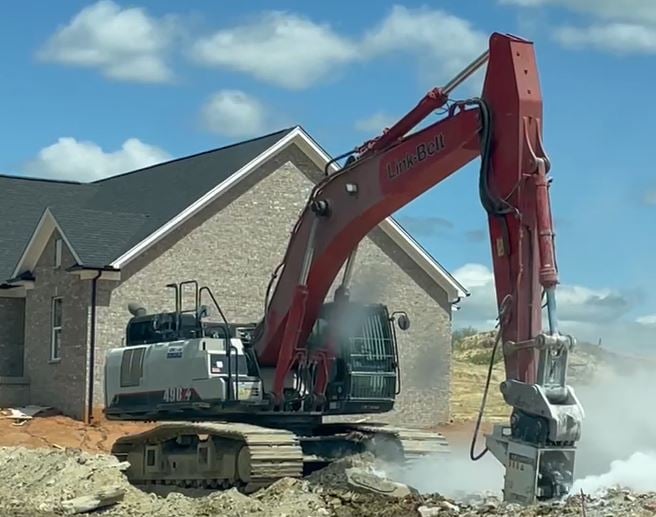
Blasting is effective, but it brings permitting, safety concerns, and scheduling delays. Hydraulic hammers avoid blasting but introduce their own problems. They are slow, loud, hard on equipment, and often require frequent rebuilds. Trenchers can move material quickly, but they are expensive to own and sit idle when rock work is finished.
Contractors are looking for a method that keeps production moving without adding new layers of cost or complexity. Rock cutting fills that gap.
How KEMROC Excavation Attachments Work
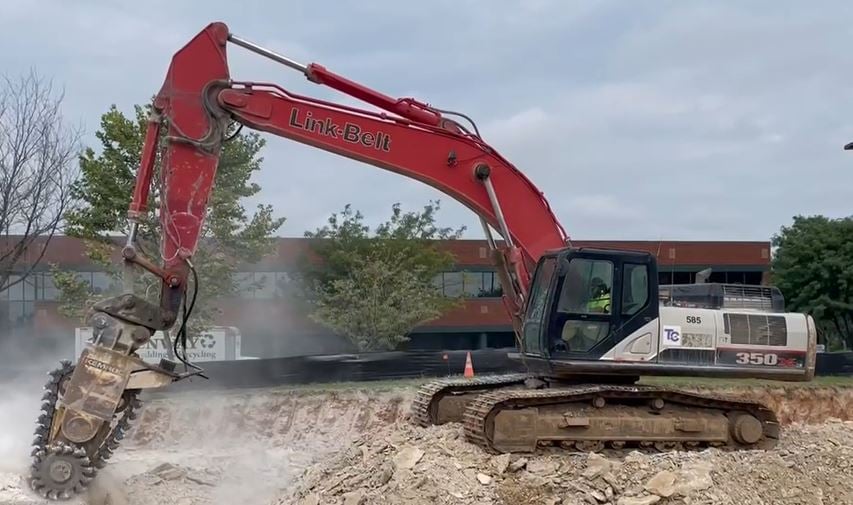
KEMROC cutters mount directly to an excavator and remove rock through continuous cutting instead of impact. This approach delivers consistent results across trenching, utility work, and mass rock excavation. Cutting produces a predictable trench profile and reduces the need to over-excavate just to reach depth.
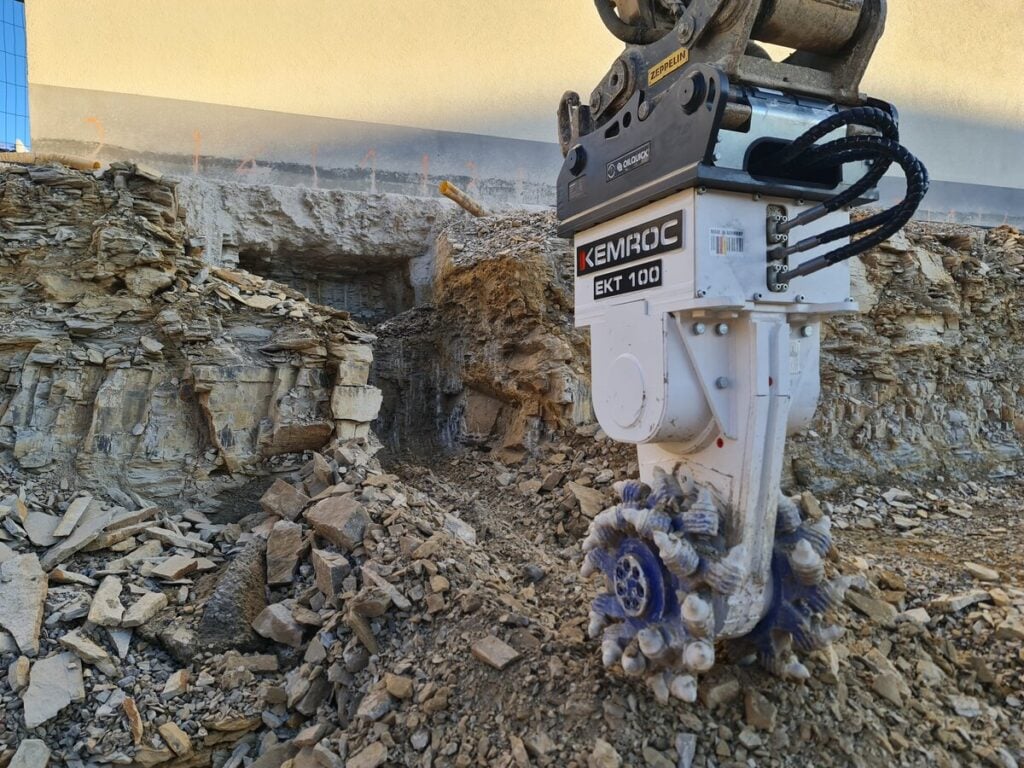
Because the rock is cut rather than shattered, the resulting material is smaller and more uniform. In many cases, that spoil can be reused as backfill or road base, which reduces hauling and disposal costs.
Real Results from Mass Rock Projects
One of the strongest examples of this technology comes from a 60,000 cubic yard mass rock project in Kentucky. Traditionally, blasting would have been the default approach. By switching to cutting, the project matched the unit cost of blasting while finishing in less time and with fewer disruptions.
This same pattern shows up across many projects. Crews are completing rock work three to five times faster than with hydraulic hammers while avoiding the downtime that comes with repeated repairs.
Lower Costs and Less Downtime
Hydraulic hammers are designed to absorb constant impact, which leads to wear, rebuilds, and lost time. Trenchers require dedicated operators and ongoing maintenance even when they are not cutting rock.
KEMROC cutters reduce these issues by using a mechanical cutting process that is easier on the machine and more predictable to maintain. Contractors save money not just on production, but also on fuel, repairs, and idle equipment.
Why Reusable Spoil Matters
Oversized rock from hammering often becomes a disposal problem. It has to be hauled away, crushed, or screened before it can be reused. Cutting eliminates much of that waste.
By producing smaller, reusable material, crews can backfill trenches faster and avoid importing stone. That single advantage can significantly reduce total project cost, especially on utility and site work.
How This Technology Fits into a Contractor Fleet
Rock cutting does not require a complete overhaul of your equipment lineup. These attachments work with excavators you already own and can be rotated between machines as needed. When rock work is finished, the excavator goes back to standard tasks instead of sitting idle like a dedicated trencher.
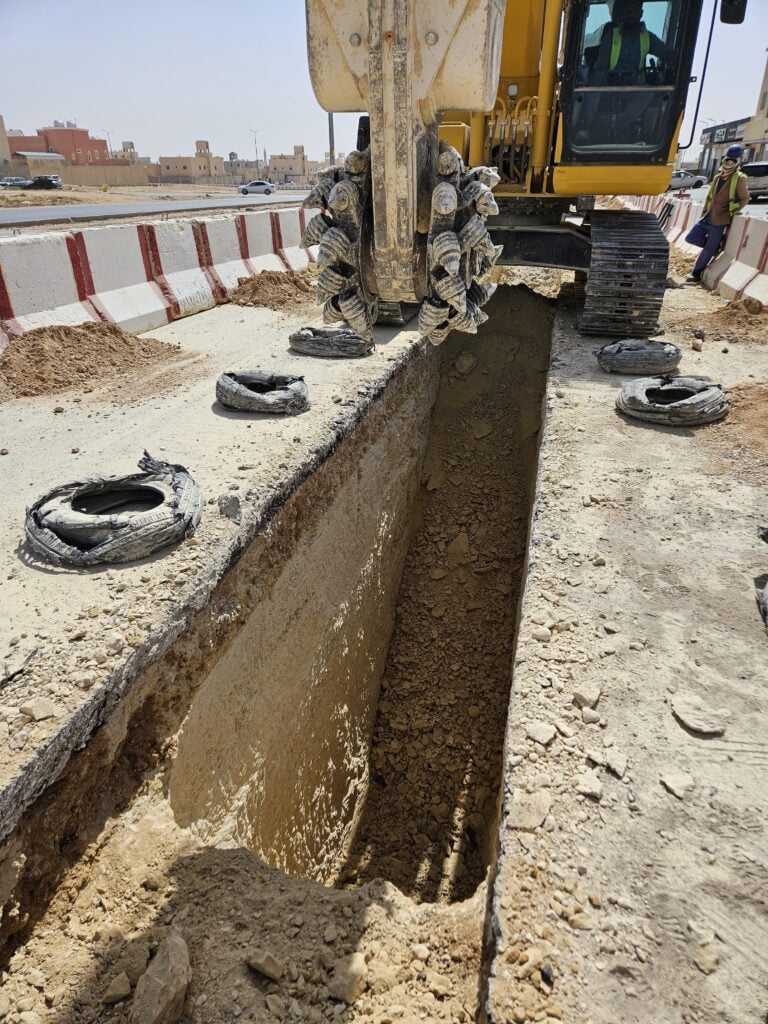
This flexibility is one of the reasons contractors across the country are adding cutters to their fleets.
Why More Crews Are Making the Switch to Excavation Attachments
KEMROC cutting technology has been used in Europe for decades, and it is now gaining traction in the United States as more contractors see it in action. Once crews experience the speed, consistency, and cost savings, cutting becomes a preferred method rather than an experiment.
Rock Hard Solutions works with contractors to help them understand where cutting fits best and how to apply it effectively on real job sites.
Ready to See the Difference
If you are dealing with slow rock production, rising repair costs, or unpredictable schedules, cutting offers a practical alternative. Seeing the technology in action often answers more questions than any spec sheet ever could.