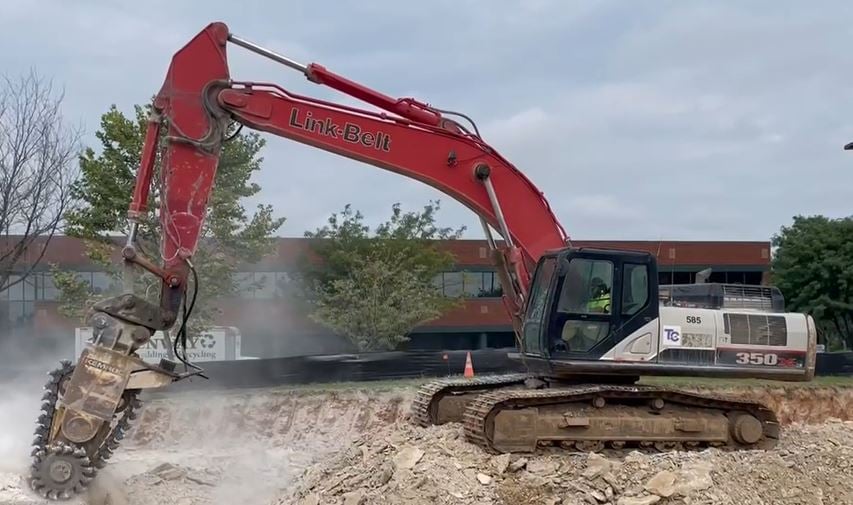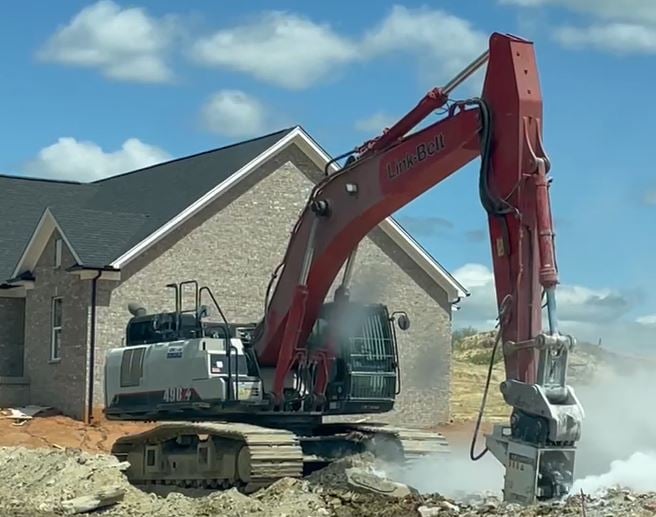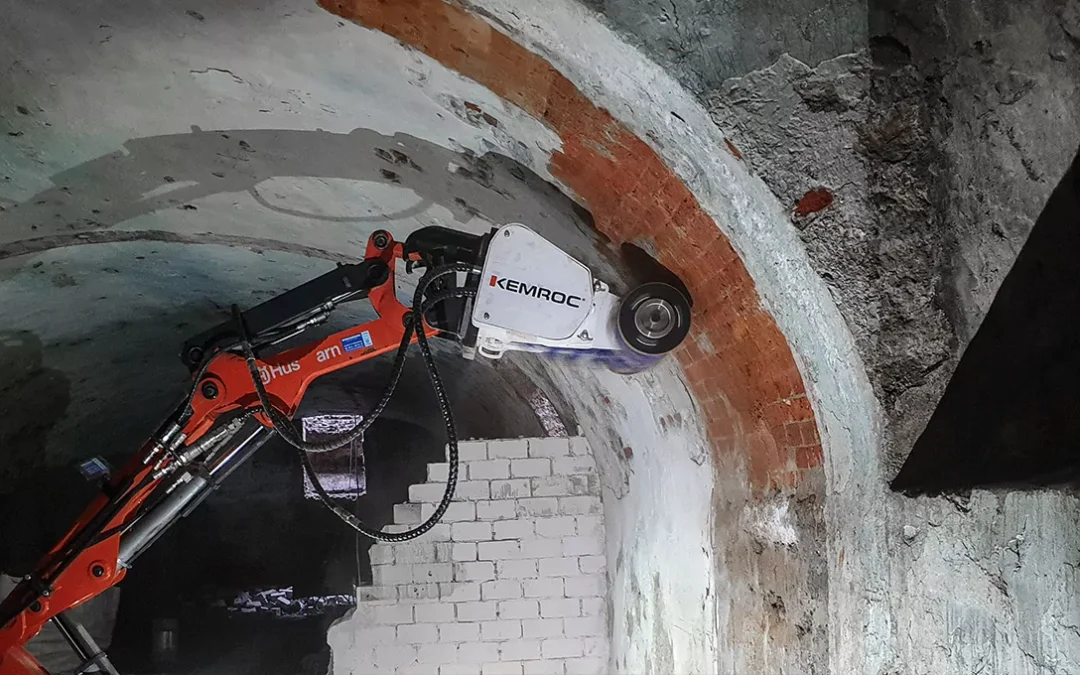

We run the largest fleet of KEMROC cutters in the United States…
and this Arizona mining demonstration did not begin as planned. Scott traveled from Kentucky to Las Vegas and then drove into northern Arizona for a scheduled gypsum mine demonstration at Black Rock Mine. The purpose of the trip was clear. Deliver the KEMROC cutters, stage the equipment, and demonstrate controlled rock cutting performance in real mining conditions.
When he arrived at the mine, the cutters were not there. The attachments had been delivered to the wrong location and were sitting somewhere in a remote box canyon in the Arizona desert. Before any gypsum rock could be cut or evaluated, the first priority became locating the missing equipment.
From Las Vegas to Black Rock Mine
The day started with a 3:00 a.m. airport run, a flight to Las Vegas, and a rental car pickup before heading east toward Black Rock Mine. The Arizona mining demonstration was scheduled to show how KEMROC chain cutters and rotary drum cutters perform in controlled excavation environments. The customer expected to see precision cutting, consistent output material, and measurable performance in gypsum rock.
Instead of preparing the machine and reviewing the cut plan, Scott was confirming that the attachments were not on site. In mining and excavation, the attachment is central to production. Without it, there is no trenching, no profiling, and no meaningful demonstration of cutting efficiency or output quality.
Confirming the Delivery Location
Once it was clear that the KEMROC cutters were not at Black Rock Mine, the next step was to trace the delivery coordinates. The GPS pointed more than an hour away over desert terrain. In northern Arizona, forty miles does not mean quick travel. Roads are rough, remote, and often shared with mine access traffic and recreational vehicles.
The attachments were reported to be sitting in a box canyon, which immediately introduced a second challenge. Even if located, they would need to be recovered and transported safely to the mine before the Arizona mining demonstration could move forward. The focus shifted from equipment setup to equipment recovery.
Why Equipment Matters in Mining
An Arizona mining demonstration is not simply about proving that a cutter can turn. It is about showing how a properly matched excavator attachment performs under job site conditions. KEMROC cutters are engineered for precision trenching, mining of medium hard minerals, foundation work, and controlled rock excavation. They are designed to maintain consistent trench width, reduce unnecessary overbreak, and produce fine-grained material that is suitable for use as fill.
However, performance claims mean nothing if the attachment is not positioned correctly on the job site. Logistics is often overlooked in mining projects, but it directly impacts production schedules, contractor confidence, and customer evaluation. A delayed delivery can shift an entire timeline, especially when a demonstration has been scheduled with decision makers on site.
Production Starts Before the First Cut
In construction and mining, production does not start when the cutter touches the rock. It starts with planning, delivery coordination, and proper staging. For this Arizona mining demonstration, the first obstacle had nothing to do with rock strength or cutting force. It was a logistics issue in the desert.
Before the KEMROC cutters could demonstrate controlled cutting in gypsum, they had to be found, recovered, and transported to Black Rock Mine. Episode 1 documents that search and the reality of working in remote mining environments where distances are long and access is limited.
This was only the beginning of the trip. The recovery effort and the actual mining demonstration were still ahead.