Rock excavation can make or break a job.
If you have been in construction long enough, you know one of the fastest ways to lose money on a project is underestimating rock.
Rock excavation can make or break a job.
Bid it too high and you lose the project.
Bid it too low and now you are stuck with a job that takes longer, costs more, and eats into the margin you thought was there.
That is why knowing how to bid rock excavation jobs matters so much. It is not just about guessing how hard the rock is. It is about understanding how you are going to remove it, how predictable that method will be, and what it is really going to cost you in production, equipment, and risk.
Why Rock Excavation Bids Go Sideways
A lot of contractors still look at rock the same way.
They assume they are going to hammer through it with a breaker, or maybe bring in blasting if the project allows it.
The problem is that both of those methods can make production hard to predict.
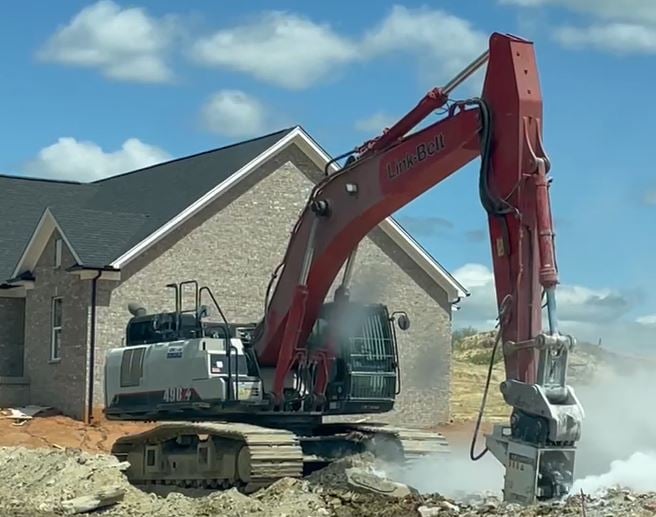
Breakers are slow and hard on equipment. If the rock is tougher than expected, production can fall off fast and the numbers you built the bid around stop working.
Blasting can move material quickly, but it brings its own set of costs and complications. Permits, safety zones, vibration concerns, and location restrictions can all change what the job really costs.
That is where a lot of contractors get hurt. They bid the rock based on what they hope will happen instead of what the removal method is actually likely to do.
The First Question to Ask Before You Price the Rock
When bidding rock work, the first question should be simple.
What is the most efficient way to remove this rock?
That question drives everything.
Because production is what holds the numbers together. If the removal method is slow, inconsistent, or hard on the machine, it gets a lot harder to build a bid you can trust.
That means you have to look at the whole job, not just the material itself.
What kind of rock are you dealing with?
How much material has to come out?
How is the site laid out?
What equipment is actually going to keep production moving?
How predictable is that production rate once the work starts?
Those are the questions that matter.
Why Production Predictability Matters
This is where a lot of rock bids are won or lost.
If production is predictable, you can price the work with a lot more confidence.
If production is unpredictable, you are guessing.
That is the problem with methods that can slow down fast or get complicated once conditions change. When a breaker starts losing production, the job starts losing margin. When blasting becomes harder because of jobsite restrictions or added risk, the cost can move in a hurry.
If you want to understand how to bid rock excavation jobs the right way, start with production. Not what you want it to be. What it is actually likely to be under real job conditions.
What Changed for Us
My family runs T&C Contracting, and we deal with rock excavation all the time.
For years, we handled rock the way most contractors do. We hammered through it.
But over time, we realized there were more efficient tools for certain kinds of rock excavation. That is when we started using cutters.
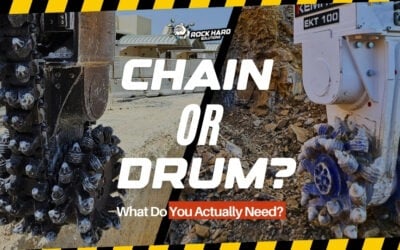
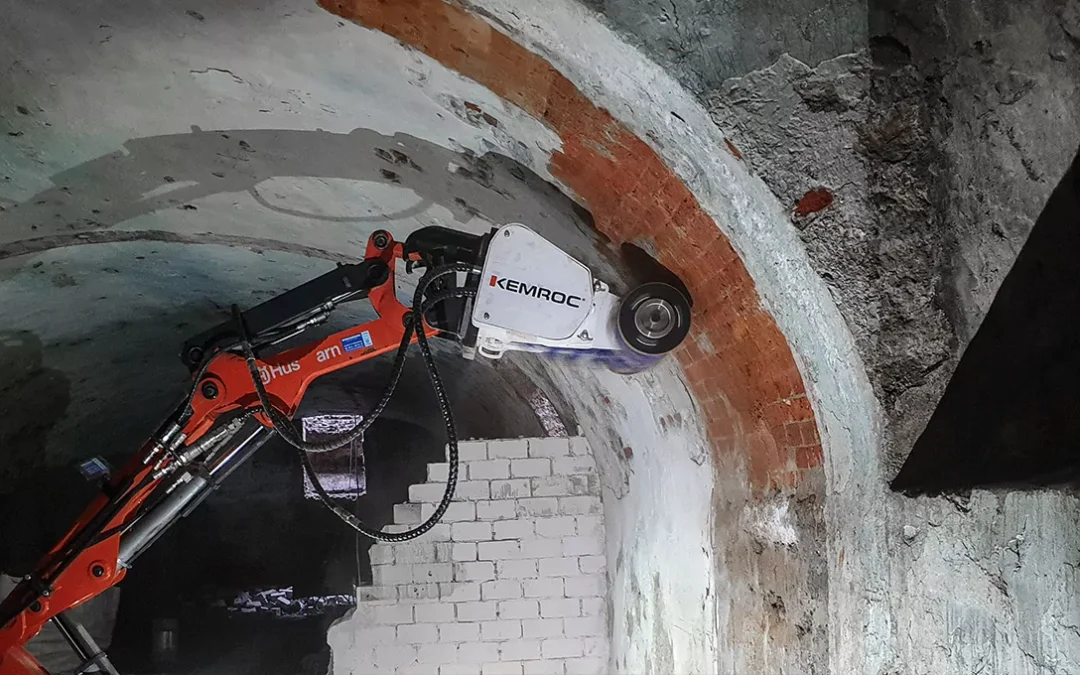
Drum cutters for larger rock removal.
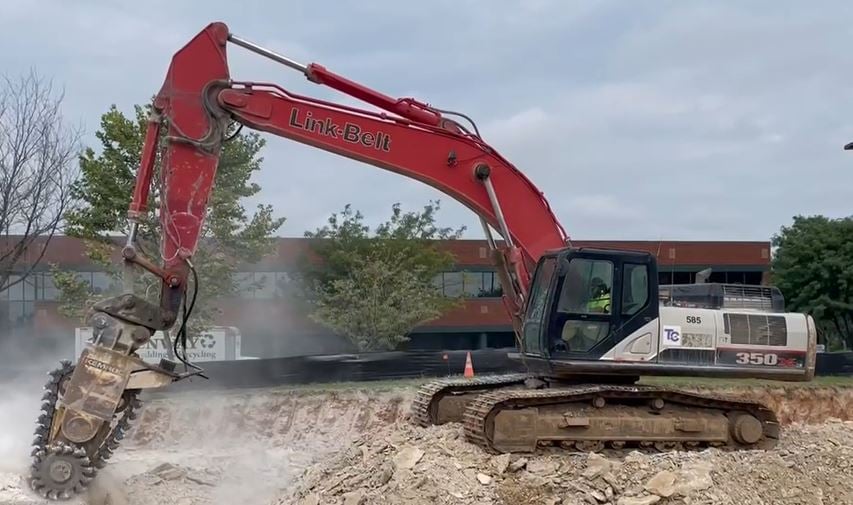
Chain cutters for trenching applications.
Instead of hammering rock and hoping production holds up, we are able to cut it in a controlled, continuous process. That makes production more predictable, which makes bidding more predictable too.
And when production is more predictable, it gets a whole lot easier to put together numbers you can actually trust.
Why Cutters Can Improve the Bid
One of the biggest advantages KEMROC cutters give contractors is consistency.
With the right application, they let you remove rock in a more controlled way instead of relying on a method that can fall off fast when the rock or the conditions get tougher than expected.
That matters for more than just removal time.
It affects trucking, material handling, spoils that can be reused, and whether you have to import material back into the job.
In many cases, the material produced by cutters can often be reused as backfill. That can mean less trucking, less imported material, and lower overall project costs.
Those are the kinds of efficiencies that can make a real difference when you are trying to stay competitive on a bid without giving away the job.
A Lot of Contractors Still Have Not Seen These Tools Work
That is still one of the biggest gaps in the U.S. market.
These cutters have been used across Europe for almost forty years, but many contractors here are just starting to get exposed to them.
That is actually how Rock Hard Solutions got started.
We began using cutters in T&C Contracting, saw the productivity gains firsthand, and decided to help other contractors get access to the same technology.
Because once you see what the right cutter can do on the right job, it changes how you look at rock work.
And it changes how you bid it.
What to Look At Before You Put Numbers Together
If you are figuring out how to bid rock excavation jobs, these are the questions that matter most:
What kind of rock are you dealing with?
Not all rock behaves the same. The harder it is and the more variable it is, the more important your removal method becomes.
How much material has to be removed?
A narrow trench and a large open rock cut are not the same job. The method should match the application.
What equipment will actually be most productive?
A lot of bids go wrong because contractors use the method they are used to, not the one that fits the work best.
How predictable is your production rate?
This is the one that protects your margin. If you do not have a good handle on production, the rest of the bid is sitting on weak ground.
The Best Way to Understand the Difference
The best way to understand what these machines can do is not just by watching a video.
It is by running one on your own jobsite.
That is why we offer a try-before-you-buy option. We will bring the attachment out, help install it on your excavator, and train your operator so they know exactly how to run it.
Run it on your job for a month. Once contractors see what it can do under their own conditions, most decide they want to keep it.
And if it is not the right fit, no problem. We will take it back and get it into the hands of the next contractor who is ready to put it to work.
Final Thoughts on How to Bid Rock Excavation Jobs
If you are bidding rock work and want to protect your margin, start with the method.
Do not just guess at the rock and hope your usual approach still works.
Look at the job, the access, the amount of material, and the production rate you can realistically expect. Then match the equipment to the work.
That is how to bid rock excavation jobs with a lot more confidence.
At Rock Hard Solutions, we work with contractors every day who are trying to make rock excavation more predictable and more profitable. If you want to talk through a project and see whether a cutter would make sense for the work in front of you, reach out and let’s talk.