
When a job hits rock, most contractors usually look at two options first. Break it or blast it.
And on the surface, blasting can look like the cheaper way to go.
But that is usually only true if you are looking at the cost to break the rock. That is not the number that really matters. What matters is the total cost to finish the job.
That is where a lot of rock excavation jobs get expensive.
The Problem With Looking at Break Cost Alone
Blasting can look efficient at the start because it gets the rock loose fast. But once the blast is done, the job usually gets more complicated.
Now you are dealing with oversized material spread across the site. In a lot of cases, that rock is too large to reuse as-is. So the next step is secondary breaking.
That means more equipment, more machine hours, more labor, and more cost.
Then comes hauling. A lot of blasted rock has to be loaded out and trucked off site. That adds cost quickly, especially on bigger jobs where trucking and disposal stack up fast.
After that, you still have to replace what was removed. So now you are paying to bring fill back in.
That is the part a lot of people miss. Blasting may look cheaper when you only compare the initial rock breaking cost, but the full job cost often tells a very different story.
Why Blasting Can Drive Up Rock Excavation Costs
The real cost of rock excavation is not just about how fast you can break the material.
It is about everything that happens after the rock comes out.
With blasting, that often includes:
- secondary breaking of oversized material
- trucking blasted rock off site
- disposal costs
- imported fill to replace removed material
- added coordination, handling, and jobsite movement
That is how a method that looks cheap at the beginning can become one of the more expensive ways to finish the project.
The Risk Side of Blasting Matters Too
Cost is only part of the equation.
Blasting also brings risk that can affect the whole job. Fly rock, vibration, permits, nearby structures, traffic exposure, and liability all have to be considered. Those issues do not always show up in the original number, but they can affect insurance, scheduling, and overall project exposure in a big way.
We saw that firsthand on a local project at the Veterans Hospital. During blasting, a large piece of rock ended up out on the interstate. A car struck it and the damage to the vehicle was catastrophic.
Thankfully no one was killed.
But that kind of incident shows exactly why blasting risk cannot be treated like a side note. One bad moment can create major liability, project delays, and costs that were never part of the original plan.
How Drum Cutters Change the Job
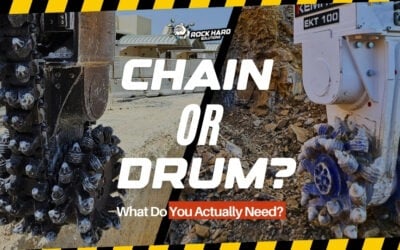
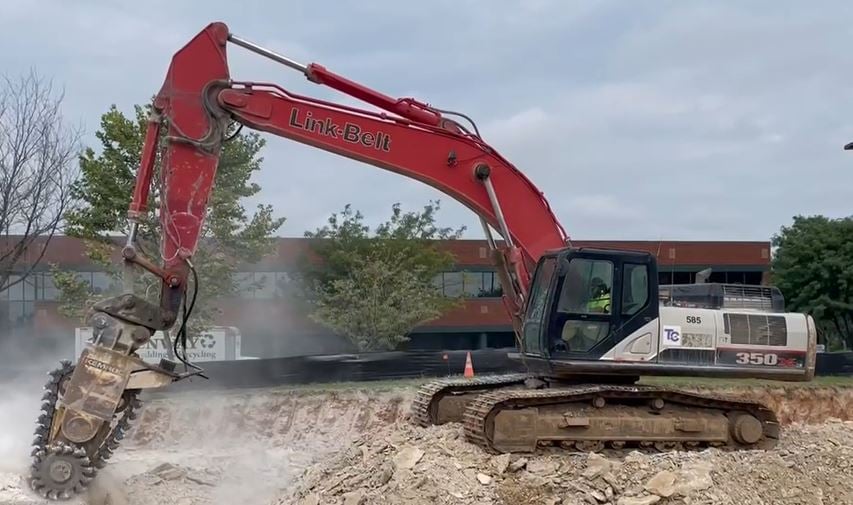
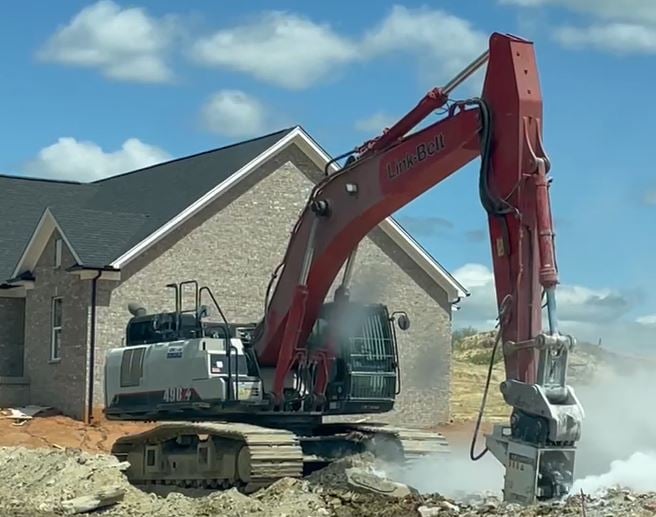
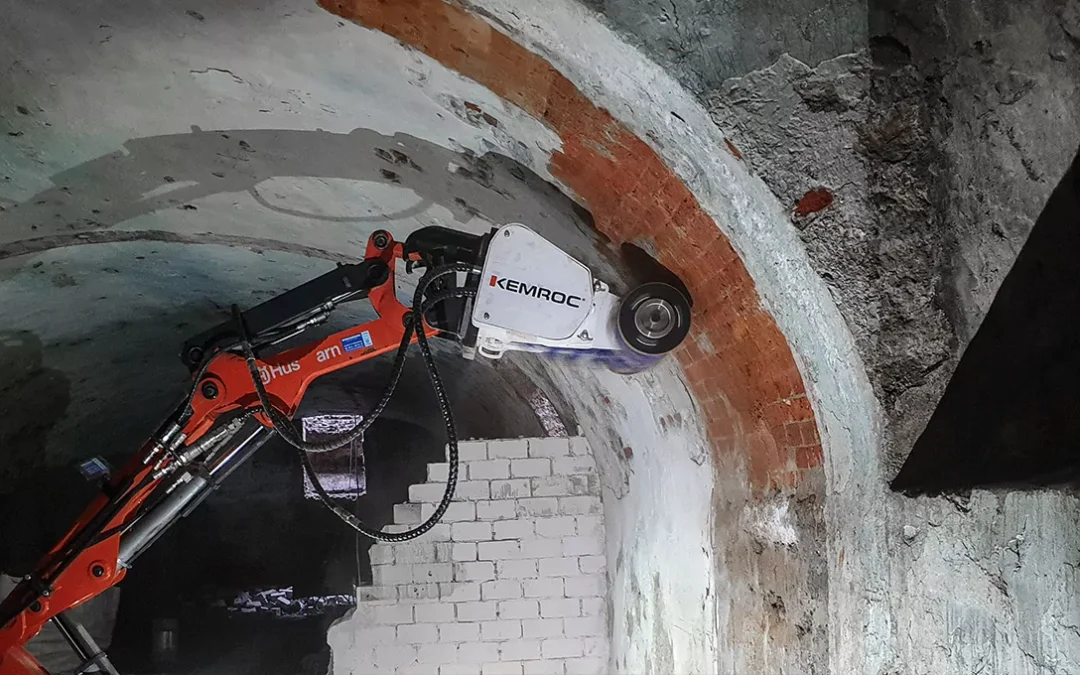
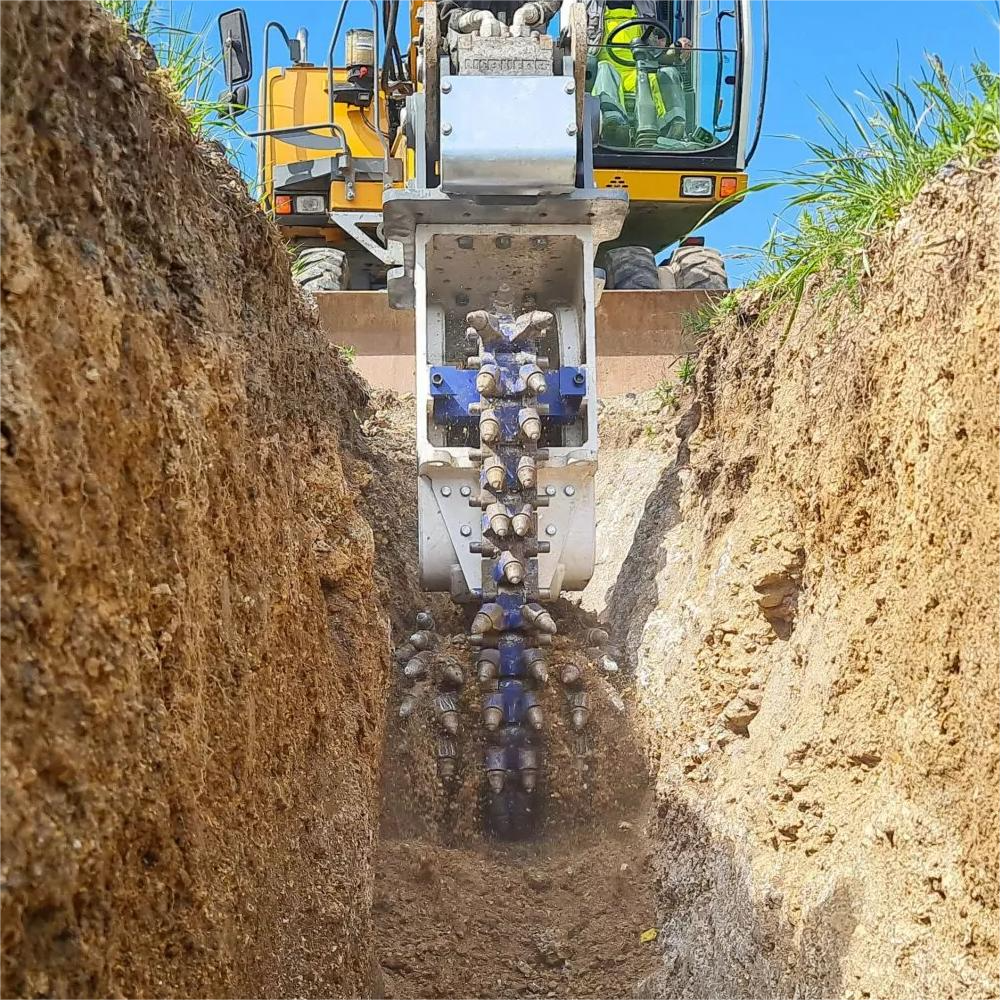
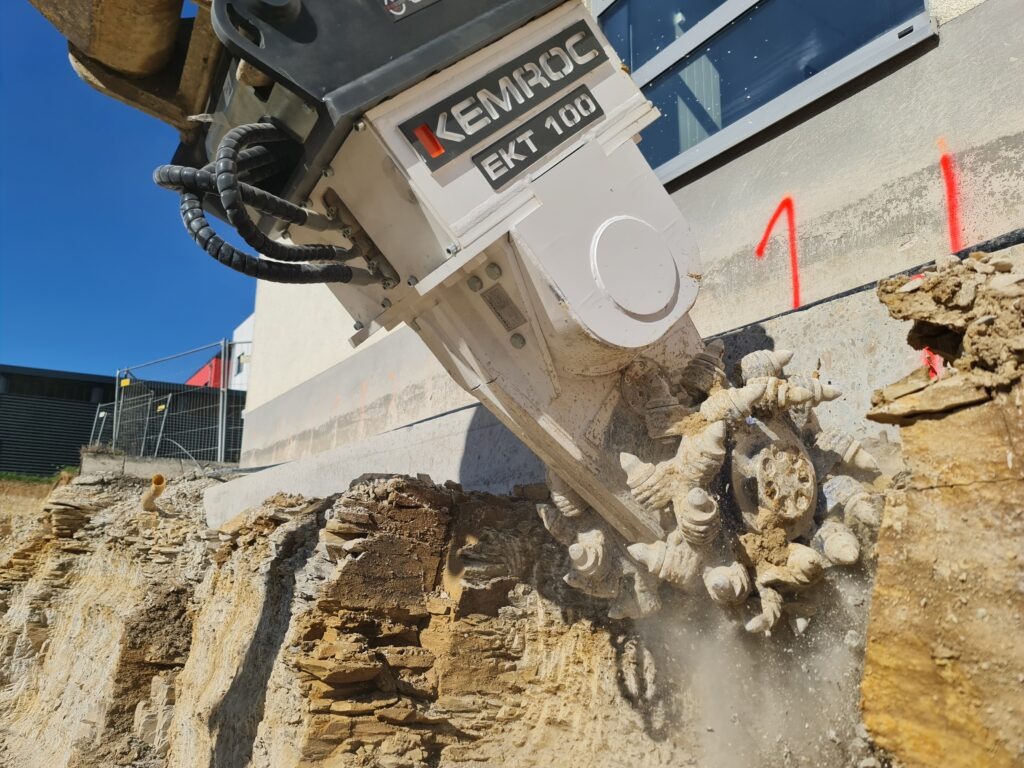
A KEMROC drum cutter changes the process because you are not just breaking rock. You are processing it.
Instead of creating massive blasted chunks that need more handling, a drum cutter produces more uniform material that is often usable right there on site.
That changes the economics of the job.
You can reduce or eliminate secondary breaking. You can cut down on hauling. You can avoid removing usable material only to turn around and buy fill to bring back in.
On many jobs, the spoil can go right back into the trench or back into the project as backfill.
That means fewer steps, fewer machines, fewer truckloads, and fewer extra costs after the rock is cut.
A Better Way to Compare Blasting vs Drum Cutters
This is where a lot of contractors get surprised.
If the question is, what is the cheapest way to break rock, blasting may look like the winner at the start.
But that is the wrong question.
The better question is, what is the most efficient way to finish the job?
When you compare blasting vs drum cutters that way, the picture gets a lot clearer. Even if the equipment cost for a drum cutter looks higher up front, the total project cost is often lower because you are cutting out so many extra steps.
Less secondary breaking. Less hauling. Less imported fill. Less handling. Less exposure.
That is what makes the difference on the back end of a job.
What We Saw in Real Work
This is not theory for us.
My family owns T&C Contracting, and for years we did what most contractors do when we hit rock. We used hydraulic breakers.
But after working with drum cutters, it became clear how much more efficient they were on a lot of jobs. The more we used them, the more obvious it became that this was a better way to handle rock in the right conditions.
Today, we have replaced all of our hydraulic breakers with a fleet of KEMROC attachments for day-to-day work.
That is also what led me to become a dealer. I saw firsthand how much time and money this technology could save, and I realized most contractors in the U.S. still did not know it was an option.
Real Example: The Bourbon Distillery Project
One of the best examples was our Bourbon Distillery project.
On that job, we cut more than 60,000 cubic yards of rock, and every bit of that material was reused on site.
That is a massive difference when you look at total project cost.
Thousands of truckloads never had to leave the job. There was no disposal cost tied to hauling blasted rock away. There was no need to import fill to replace material that had already been paid to remove.
That is the advantage of mechanical cutting when the goal is not just to break rock, but to finish the job efficiently.
Why More Contractors Are Looking at Mechanical Rock Cutting
Drum cutters are not new technology.
They have been used across Europe for decades and have a long track record in trenching, controlled rock excavation, profiling, and other applications where precision and material control matter.
What is changing now is that more contractors in the U.S. are starting to look past the initial break cost and pay attention to the full job cost.
That is where mechanical rock cutting starts making a lot of sense.
Final Thought on the Real Cost of Rock Excavation
If you are comparing blasting, breakers, and drum cutters, do not stop at the first number.
Look at the whole job.
Can the material be reused? How much extra handling is involved? How many truckloads are leaving the site? Are you going to have to buy fill back in? What risk does the method add to the project?
Those are the questions that tell you what rock excavation is really going to cost.
Because the cheapest way to break rock is not always the cheapest way to finish the job.
If you are dealing with rock excavation and want to see whether a KEMROC drum cutter is the better fit for your next project, reach out to Rock Hard Solutions and let’s talk.